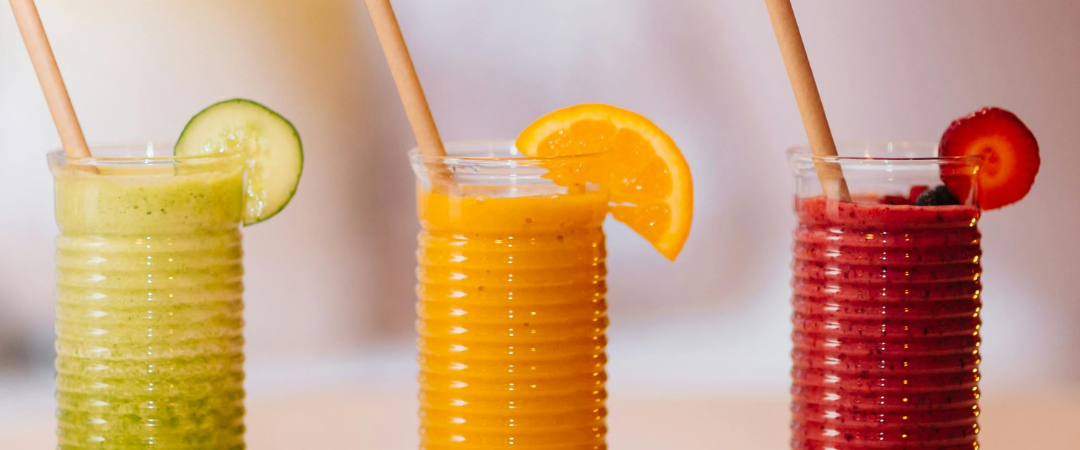
What ingredients make the most colorful smoothies? In my experience, it’s almost always natural fruits, vegetables, and powders that pack pigment — think beets, butterfly pea flower, spirulina, dragon fruit, and frozen berries. I didn’t always care about how my smoothies looked. For years, mine were a murky shade of “brownish-green” no matter what I threw in. Then one morning I made a layered berry-mango smoothie just to see if I could, and I got hooked. Turns out, a colorful smoothie isn’t just prettier for your feed — the pigments themselves usually mean more antioxidants too. Here’s everything I’ve learned about building smoothies that look as good as they taste.
What Makes a Smoothie Colorful?
A smoothie gets its color from natural plant pigments — anthocyanins (reds, purples, blues), carotenoids (oranges, yellows), and chlorophyll (greens). These pigments come straight from the fruits, vegetables, and superfood powders you blend in, not from artificial dye.
In my kitchen, I think of color in three pigment families:
- Reds and purples — berries, beets, red cabbage, dragon fruit
- Oranges and yellows — mango, turmeric, carrots, pineapple
- Greens and blues — spinach, matcha, spirulina, butterfly pea flower
The more concentrated the pigment, the more vivid the result. That’s why a tiny scoop of spirulina powder can turn an entire blender jar a deep forest green.
Which Ingredients Give the Boldest Color?
Some ingredients are simply more pigment-dense than others, and these are the ones I reach for first when I want a smoothie that pops.
Red and pink smoothies:
- Frozen strawberries or raspberries
- Beetroot (raw or pre-cooked)
- Dragon fruit (pink variety)
- Pomegranate juice
Orange and yellow smoothies:
- Mango
- Pineapple
- Carrot juice
- A pinch of turmeric
Green smoothies:
- Spinach or kale (mild flavor, strong color)
- Spirulina powder
- Matcha powder
- Avocado (for a creamier, lighter green)
Blue and purple smoothies:
- Butterfly pea flower powder or tea
- Blueberries
- Blue spirulina (a milder-tasting cousin of regular spirulina)
- Purple sweet potato
I keep small bags of spirulina, beet powder, and butterfly pea flower in my pantry specifically for color experiments — a teaspoon goes a long way.
Why Do These Ingredients Create Such Vivid Color?
Plant pigments are concentrated compounds, so even a small amount transforms the whole blend. Anthocyanins, the pigments behind reds, purples, and blues, are also pH-sensitive — this is why butterfly pea flower can shift from blue to purple or pink depending on whether you add lemon juice.
I’ve tested this myself: a butterfly pea flower smoothie turned from deep blue to lavender the moment I squeezed in lime. It’s a fun party trick, but it’s also a useful thing to know if you want a specific shade and your smoothie isn’t cooperating.
How Do I Actually Build a Colorful Smoothie?
Here’s the process I follow every time I want a smoothie that looks intentional rather than accidental:
- Pick your color family first. Decide if you want red, green, orange, or blue before you start adding ingredients.
- Choose a pigment-rich base. One strong ingredient (beet, spirulina, mango) does more work than five weak ones.
- Balance with a neutral base. Banana, yogurt, or oat milk mellows out strong flavors like beet or spirulina without diluting the color too much.
- Blend less, not more, if you want texture. A slightly thicker blend holds color and layers better than a thin, watery one.
- Layer for a multi-color effect. Blend each color separately, then pour them into the glass one at a time, starting with the thickest mixture at the bottom.
For a layered effect, I usually make a mango layer and a berry layer separately, chill both, then pour slowly down the side of a tilted glass so they don’t merge.
Are There Any Downsides to Colorful Smoothie Ingredients?
A few things to watch for, honestly:
- Strong colorants can stain. Beet powder and butterfly pea flower will stain light-colored blender parts, countertops, and even your hands if you’re not careful.
- Some powders are pricey. Blue spirulina and butterfly pea flower cost more per ounce than basic frozen fruit.
- Color doesn’t always mean flavor balance. A vivid green spirulina smoothie can taste seaweed-like if you don’t pair it with enough fruit or banana.
- Not all “colorful” add-ins are natural. Some pre-made smoothie mixes use artificial food coloring instead of real pigment-rich ingredients, so it’s worth checking labels if you’re buying rather than blending from scratch.
None of these are dealbreakers for me, but they’re worth knowing before you commit to a $20 bag of blue spirulina.
Natural Pigments vs. Food Coloring: Which Is Better?
Natural plant pigments and artificial food coloring can both make a smoothie look vibrant, but they’re not equivalent.
| Factor | Natural Pigments | Artificial Food Coloring |
|---|---|---|
| Nutritional value | Often rich in antioxidants and micronutrients | None |
| Flavor impact | Can add subtle flavor (earthy, tart, grassy) | Flavorless |
| Color intensity | Strong but can fade slightly over time | Very stable, doesn’t fade |
| Cost | Moderate to high for specialty powders | Usually low |
I almost always reach for natural pigments. If I’m optimizing my smoothie for color, I want the antioxidant boost too — otherwise what’s the point?
For more on the antioxidant content of pigmented fruits and vegetables, Harvard T.H. Chan School of Public Health’s overview on phytochemicals is a solid, research-backed resource.
If you’re building out your own color palette of recipes, I’ve got a few that pair well with this guide — my tropical smoothie recipes, my green and detox smoothie guide, and my smoothie bowl ideas all use these same pigment principles. If you’re shopping for equipment to make blending pigment-rich ingredients easier, check my best blender for smoothies guide, and if you’re avoiding dairy, my dairy-free smoothie recipes use plenty of these same colorful bases.
FAQ
What is the most colorful smoothie ingredient? Beetroot and butterfly pea flower tend to give the boldest, most saturated color per small amount used.
Can I make a colorful smoothie without using powders? Yes — frozen berries, mango, spinach, and beets alone can create strong color without any specialty powder.
Why did my smoothie turn brown instead of vibrant? Mixing too many color families together (red + green + orange) usually muddies the color into brown. Stick to one dominant pigment family per smoothie.
Is butterfly pea flower safe to use in smoothies? Yes, it’s commonly used in food and drinks and is considered safe in normal culinary amounts.
Do colorful smoothie ingredients add extra nutrients? Generally yes — most natural pigments come from antioxidant-rich fruits, vegetables, or algae like spirulina.
How do I keep my smoothie colors from blending together? Make each color layer separately, chill them slightly, and pour gently and slowly so they don’t mix on contact.
Key Takeaways
- Natural plant pigments — anthocyanins, carotenoids, and chlorophyll — are what make smoothies colorful, not artificial dye.
- Beets, berries, mango, spirulina, and butterfly pea flower are the most reliable color boosters.
- pH can change pigment color, especially with butterfly pea flower (blue to purple/pink with citrus).
- Layering separately blended colors creates the most striking visual effect.
- Natural pigments usually come with an antioxidant bonus that artificial coloring doesn’t offer.