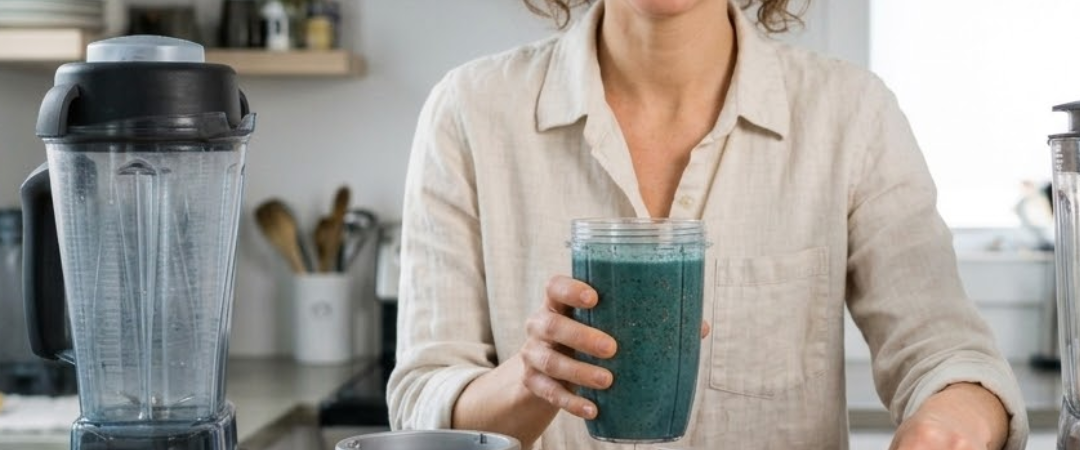
Smoothies for Nutribullet work best when you build them around the device’s strengths — a compact cup, a single-serving size, and a motor that handles soft ingredients more easily than tough ones. I got my NutriBullet years before I understood any of that, and my early smoothies were a mess of half-blended ice and frustration. Once I started recipe-building specifically for it, instead of just shrinking down full-size blender recipes, everything got easier. Here are the recipes I keep coming back to.
Why Nutribullet Recipes Need a Slightly Different Approach
A NutriBullet runs on a smaller motor and cup than a full-size blender, generally in the 600-700 watt range depending on the model. That’s plenty for soft fruit, yogurt, and most everyday smoothies, but it can struggle more with large ice cubes or very fibrous greens compared to higher-wattage full-size blenders.
The fix isn’t a weaker smoothie — it’s building recipes that play to its actual strengths:
- Soft or pre-frozen fruit instead of fresh fruit plus ice cubes
- Smaller leafy greens like spinach instead of tougher ones like kale stems
- Liquid added first, always, since the smaller cup leaves less room for error
- Portions sized for one, since the cup itself is built around single servings
Once I started thinking this way, my NutriBullet smoothies came out just as smooth as anything from a bigger blender.
My Go-To Everyday Nutribullet Smoothie
This is the one I make most mornings — simple, reliable, and built entirely around soft, easy-to-blend ingredients.
Ingredients:
- 1/2 cup milk or plant-based milk
- 1/2 frozen banana
- 1/2 cup frozen strawberries
- 1 tablespoon almond butter
Method: Add the liquid first, then the rest. Blend until smooth, about 30-45 seconds. No ice needed — the frozen fruit does that job.
Green Smoothie for Nutribullet
Tougher greens like kale can leave stringy bits in a personal blender, so I stick with spinach here, which blends down easily even at lower wattage.
Ingredients:
- 1/2 cup almond milk
- A handful of fresh spinach
- 1/2 frozen banana
- 1/2 cup frozen mango
Method: Liquid first, then spinach, then frozen fruit. Blend until fully smooth. The banana and mango mask the spinach flavor almost completely.
Protein Smoothie for Nutribullet
Good for a quick post-workout option, since it doesn’t need much beyond what’s already soft and blend-friendly.
Ingredients:
- 3/4 cup milk or plant-based milk
- 1/2 frozen banana
- 1 scoop protein powder
- 1 tablespoon peanut butter
Method: Blend liquid and protein powder first for a few seconds to avoid clumping, then add the rest and blend until smooth.
Berry Oat Smoothie for Nutribullet
This one leans on oats instead of yogurt for thickness, similar to the approach in my no-yogurt smoothie recipe, which translates well to a smaller blender since oats don’t require much power to break down.
Ingredients:
- 1/2 cup milk
- 1/2 cup frozen mixed berries
- 2 tablespoons rolled oats
- 1 teaspoon honey (optional)
Method: Blend liquid and oats first for about 10 seconds to soften them slightly, then add the berries and blend until smooth.
Tropical Smoothie for Nutribullet
Soft tropical fruit blends easily even in a smaller motor, which makes this one of the most forgiving recipes on this list.
Ingredients:
- 1/2 cup coconut milk
- 1/2 cup frozen pineapple
- 1/2 frozen banana
- A small squeeze of lime
Method: Blend until smooth, about 30 seconds. Pineapple breaks down easily, so this one rarely needs extra blend time.
Chocolate Banana Smoothie for Nutribullet
A milkshake-style option that’s become my unofficial dessert smoothie.
Ingredients:
- 3/4 cup milk
- 1 frozen banana
- 1 tablespoon cacao powder
- 1 tablespoon peanut butter
Method: Blend until fully smooth. The frozen banana gives it a thick, creamy texture without needing ice.
Tips for Better Nutribullet Smoothies
A few habits that made the biggest difference for me:
- Always add liquid first. This matters more in a personal blender than a full-size one, since there’s less room for ingredients to circulate.
- Use frozen fruit instead of ice. Ice can be harder on a smaller motor and tends to leave a grittier texture than frozen fruit does.
- Cut larger fruit into smaller pieces before freezing. Whole frozen banana halves blend more easily than one giant frozen chunk.
- Don’t overfill the cup. Stick to the max-fill line, since overfilling reduces how well ingredients circulate around the blade.
- Pulse before a full blend if using oats or seeds. A few short pulses help break them down before the final smooth blend.
If you want a deeper comparison of how personal blenders like the NutriBullet stack up against full-size models, I cover that in my best home smoothie blenders comparison.
What Doesn’t Work Well in a Nutribullet
A few things I’ve learned to avoid or adjust for:
- Large ice cubes — they tend to rattle around more than they blend; frozen fruit works better
- Tough greens like kale or celery — fine occasionally, but expect a few stringy bits unless you blend longer
- Very large batches — the cup is built for one serving, not family-size portions
- Whole nuts or hard seeds — better pre-ground or used in smaller amounts than you might add to a full-size blender
None of these are dealbreakers, just things to plan around if you want consistently smooth results.
FAQ
Can I use ice in a Nutribullet? You can, but frozen fruit generally blends more smoothly and is gentler on the motor than large ice cubes.
Why is my Nutribullet smoothie not blending evenly? This is usually a liquid ratio issue. Add liquid first, and make sure it covers the bottom blades before adding solid ingredients.
Can I make a green smoothie in a Nutribullet? Yes, especially with softer greens like spinach. Tougher greens like kale may need a longer blend or smaller amount to avoid stringy bits.
How much liquid should I add to a Nutribullet smoothie? Roughly 1/2 to 3/4 cup per single serving, adjusted depending on how thick you want the final texture.
Is a Nutribullet powerful enough for daily smoothies? Yes, for most everyday smoothies with soft or frozen fruit. It’s less suited to very tough ingredients like large ice cubes or fibrous greens in bulk.
Key Takeaways
- Build Nutribullet recipes around soft or frozen fruit rather than fresh fruit plus ice cubes.
- Always add liquid first to help ingredients circulate in the smaller cup.
- Spinach works better than tougher greens like kale for smooth green smoothies.
- These recipes are sized for one serving, matching the Nutribullet’s single-serve design.
- A few short pulses before the final blend help break down oats, seeds, or nut butter more evenly.